


Idle Boxer
4.4170.00 Reviews
App Specs
- Version
- 1.21.1
- Updated On
- License
- Free
- Downloads
- 100,000+
- Developer
- Tap Nine
- Categories
- Simulation
- Platform
- Android
Screenshots
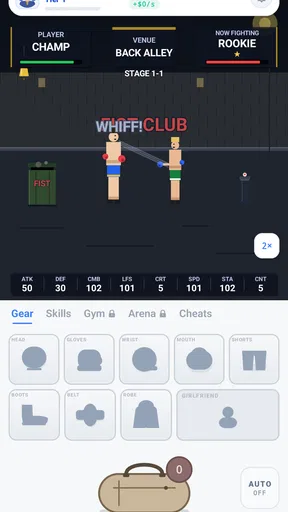
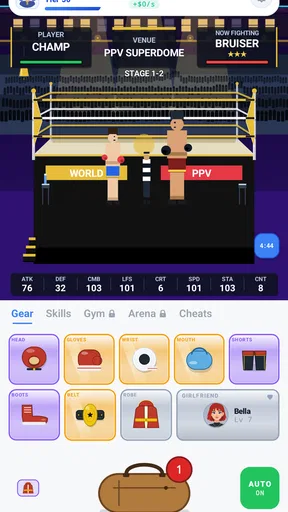
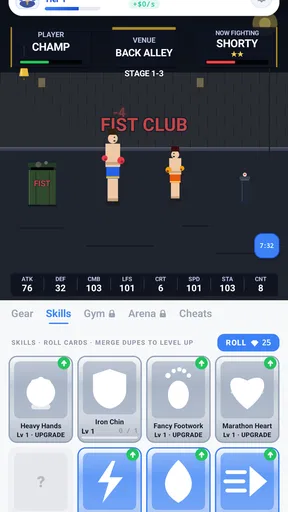

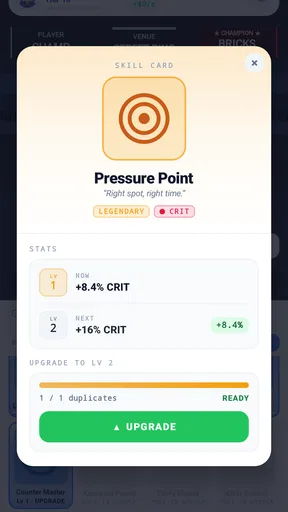
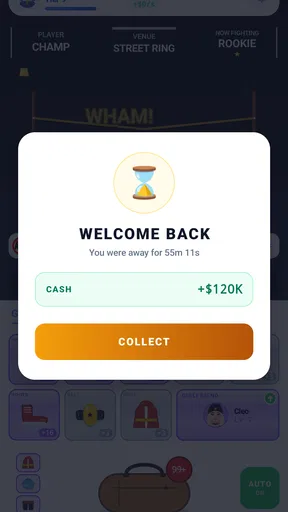
 Analysis by AppCompare
Idle boxing games appeal to me most when they give me a little progress to check without demanding a long session. Idle Boxer is built around that promise: you train a fighter, prepare for bouts, and follow a career that aims for championship status. It is a simulation game from Tap Nine, and its automated fights put the emphasis on preparation rather than precise button timing. That makes it an easy fit for a quick break, though it also means players looking for hands-on boxing will want to look elsewhere.
What the purchase details mean in practice
The game is free to download, with in-app purchases listed from $4.99 to $99.99 per item. I’d treat that range as a reason to decide your spending limits before playing, not as a measure of what progress requires. The confirmed prices tell me that optional purchases can span a wide range; they do not tell me what each item contains or whether buying anything is necessary. If I were trying it casually, I’d start without spending and see whether the training-and-fighting loop holds my interest first.
There is a useful distinction between a free starting point and a game whose purchase options may tempt players who want faster progress. If you share a device with a younger player, it is worth checking purchase controls before handing it over. The age rating is Everyone 10+, which helps set expectations about the intended audience, but it doesn’t replace a family’s own rules about in-app spending.
The game has a 4.3 average from around 1.2 thousand ratings, alongside 53 written reviews and over 10 thousand installs. Those figures suggest that it has found an audience, but they can’t tell me whether its pacing will suit you personally. The current version is 1.16.2, and it requires Android 8.0 or later. It was released on April 24, 2026, so anyone checking compatibility should compare that operating-system requirement with their device before downloading.
How the boxing career plays out
First things first, let’s talk about what makes Idle Boxer stand out in the crowded world of idle games. The game’s premise is simple yet engaging: you’re in charge of training and managing a budding boxer, turning them from a scrawny rookie into a heavyweight champion. And yes, it’s as satisfying as it sounds.
The game starts you off with a basic fighter who looks like they could use a few rounds in the gym. Your job? Train them, upgrade their skills, and watch them climb the ranks. The progression is surprisingly addictive, with each fight bringing you closer to the ultimate goal: the championship belt.
Training and upgrades reward deliberate check-ins
Training your boxer is the heart of the game. You’ll be upgrading various skills such as strength, speed, and stamina. It’s a bit like raising a virtual pet, only this pet throws punches instead of begging for treats. The more you train, the faster your boxer improves, leading to more victories in the ring.
Worth Reading Before You Choose

EA SPORTS FC Mobile 26 Is a Bigger Football Game, but It Takes Time

Flipboard Shows What News Apps Must Do Beyond the Feed

Switching to Android Auto Means Rethinking Your Driving Routine

Google Calendar Makes a Crowded Week Easier to Manage

Ludo King Makes the Most of the Minutes Between Plans

Baby Panda World Brings Quick Play to Modern Phones, but Its Game Library Feels Busy
And let’s not forget about the upgrades. There are tons of equipment and gear to unlock, each offering unique boosts to your boxer’s stats. It’s a bit of a grind, but seeing your fighter grow stronger and faster is immensely rewarding.
One practical way I’d approach the training loop is to treat each visit as a short decision point: check what is holding the fighter back, make a focused improvement, then see how the next bout goes. That is more useful than tapping upgrades at random, because a visible loss or a tougher opponent gives you a reason to reconsider where your effort should go. The balance among strength, speed, and stamina matters in the way the game presents training, so I wouldn’t assume that pushing one stat alone is always the best answer.
Gear can make progression feel more tangible, but unlocking equipment also gives the routine a collectible edge. If you enjoy gradual optimization, that can be a satisfying reason to return. If you dislike repeating actions to make incremental gains, the same loop may feel like a chore. The key trade-off is that the pleasure comes from watching a prepared boxer improve over time, not from mastering a complicated sequence of controls.
Automated bouts put preparation ahead of reflexes
The fights in Idle Boxer are where the game truly shines. They’re automated, meaning you can sit back and watch your fighter do their thing. It’s all about strategy and preparation, ensuring your boxer is well-equipped and trained before stepping into the ring.
As you progress, the opponents get tougher, requiring more cunning strategies and better gear. It’s a thrilling challenge, keeping you on your toes as you strive to become the ultimate champion. The game’s championship mode is the cherry on top, offering high-stakes matches that test everything you’ve worked towards.
That automatic format is a real dividing line. Compared with a conventional boxing game built around dodging, timing, and striking during a match, this one asks you to make the important choices before the action begins. I’d recommend it to someone who likes sports management and incremental progression more than real-time competition. If you want every punch to depend on your own reactions, a direct-control boxing game is likely a better match.
For an everyday use case, imagine opening the game while waiting for a ride or during a short lunch break. You can check your boxer’s development, make a training choice, and watch a bout without needing a quiet room or a long stretch of uninterrupted attention. It is less suited to a commute where you need to keep your eyes up, of course, but the short-session structure makes more sense for spare moments than for a planned evening of deep play.
How to judge progress without turning it into a grind
When a fight becomes difficult, I’d use the result as feedback rather than immediately treating it as a prompt to buy something. Revisit the training choices and available gear, then give the fighter another chance after making a change. That simple habit helps separate a genuine preparation problem from impatience with gradual progression. It also gives you a clearer sense of whether the game’s pace is enjoyable to you.
Another useful approach is to set a stopping point for each session. For example, decide to check one training step and one fight, then leave the game until you have time again. Idle games can blur into repeated checking when progress is incremental; a small personal limit keeps the experience relaxing instead of turning it into an obligation. I would not assume that a longer session always produces a better one.
The usual alternative in this category is another idle-management game, often built around upgrading a business, a team, or a collection of characters. Here, the boxing theme gives each improvement a clear sporting context: training feeds into bouts, and bouts connect to a climb through opponents toward a title. That theme is the specific appeal, but the underlying pleasure is still incremental growth. If you need a story-heavy career mode or a detailed simulation of boxing tactics, the simple structure may not satisfy you.
Presentation keeps the focus light
Now, let’s talk about the aesthetics. Idle Boxer boasts simple yet charming graphics that are easy on the eyes. The cartoonish style adds a playful vibe, making the game accessible to players of all ages. The animations are smooth, and the interface is intuitive, ensuring a seamless gaming experience.
The menus are straightforward, with everything you need just a few taps away. Whether you’re upgrading skills or checking out new gear, navigation is a breeze. It’s clear the developers put a lot of thought into making the game user-friendly.
The clean presentation supports the game’s low-pressure feel, though simple visuals may not be enough for players who want a realistic boxing atmosphere. The interface’s value is practical: you can find training and equipment without turning a brief check-in into a hunt through complicated menus. That ease matters more in a game designed around repeated small decisions than flashy detail would.
Sound and when to play quietly
The soundtrack deserves a special mention. It’s upbeat and catchy, perfectly complementing the game’s energetic vibe. The sound effects during fights add to the excitement, making each punch feel impactful. If you’re someone who enjoys playing with sound on, Idle Boxer won’t disappoint.
In a shared space, I’d still keep the volume low or play muted if the repeated fight sounds would bother people nearby. The game’s appeal does not depend on sitting through a long cinematic sequence, so it is easy to fit into a quiet moment. That is a small but useful distinction from action games where sound cues are essential to reacting in real time.
Who will enjoy the routine—and who may not
I think this is best for players who enjoy seeing a character improve through training and who are content to watch fights rather than control them. It can also suit someone who wants a sports-flavored game to dip into between other tasks. The progression gives each visit a purpose, while the cartoon presentation keeps the boxing theme approachable rather than intense.
I’d skip it if you want a realistic fighter, detailed round-by-round tactics, or direct control over punches and defense. I’d also be cautious if repetitive upgrades quickly lose their appeal for you: the same gradual growth that makes an idle game satisfying can become monotonous when you want a new challenge every few minutes. And if you prefer games with no optional spending at all, the listed purchase range may make this a less comfortable choice, even though the game itself is free to download.
What I can—and cannot—judge about spending and fairness
The confirmed purchase information establishes that in-app items range from $4.99 to $99.99. It does not establish what those items do, whether they change competitive outcomes, or how quickly a player can progress without them. I would not claim that the game is pay-to-win or that purchases are purely cosmetic without knowing those details. The fair conclusion is narrower: spending options exist, and their listed prices vary substantially.
That uncertainty matters most if you care about competition. Since the fights are automated and preparation is central, a player deciding whether purchases affect fairness would need to know exactly what they provide and how they relate to progression. I can assess the game’s basic design as one focused on training and preparation, but I can’t responsibly promise that paid items have no effect on a player’s advantage. If competitive parity is your main concern, make that distinction part of your decision rather than assuming either outcome.
For a casual player, the safest starting plan is simple: download it only if the core loop sounds appealing, avoid buying anything until you understand what an item offers, and use the device’s purchase safeguards if children play. That approach does not require guessing how the game is monetized internally. It gives you room to decide from your own experience whether the free version is enough for the kind of short sessions you want.
A few questions worth answering before you install
Can you play it without spending? It is free to download, and the purchase facts alone do not show that payment is required. I’d begin without purchases and judge whether the training and automated bouts feel rewarding at their natural pace. How much control do you have during fights? The bouts are automated, so the main choices are made through preparation rather than live punching or defense.
Is it a good fit for a quick break? In my view, yes, if you are comfortable making a small amount of progress and then returning later. Is it a boxing simulator for someone who wants realistic match control? No: its appeal is idle progression and fighter management, not manual ring action. Does the purchase range prove that spending is necessary or that paid play is unfair? No; the prices establish that purchases are offered, but not what they change. Those are different questions, and it is worth keeping them separate.
My verdict on the long-term appeal
So, is Idle Boxer worth your time? If you’re a fan of idle games and enjoy the thrill of boxing, then absolutely. It’s a fun, engaging experience that offers plenty of content to keep you hooked. The blend of strategy, management, and automated action creates a unique gameplay loop that’s hard to put down.
While it might not be the most complex game out there, its charm lies in its simplicity. It’s perfect for those moments when you want to unwind and enjoy a bit of virtual pugilism without the stress. So go ahead, give Idle Boxer a shot, and see if you have what it takes to train the next boxing legend!
Ready to step into the ring? You can download Idle Boxer from the App Store or Google Play and start your journey to the top of the boxing world today!
Pros
- Engaging gameplay with simple mechanics.
- Frequent updates with new content.
- Offline play available for convenience.
- Colorful graphics and animations.
- Easy to learn
- hard to master.
Cons
- Requires in-app purchases for faster progress.
- Advertisements can be intrusive.
- Limited character customization options.
- Repetitive tasks may become monotonous.
- Battery drain on longer sessions.
FAQs for Idle Boxer
What is Idle Boxer, and how does it work?
Idle Boxer is a mobile game where players manage and train a boxer to climb the ranks in the boxing world. You guide your boxer through various training routines, manage resources, and schedule fights to improve skills and earn rewards. The game runs on idle mechanics, allowing progress even when you're not actively playing.
Is Idle Boxer free to play, or are there in-app purchases?
Idle Boxer is free to download and play. However, it offers in-app purchases that can enhance the gaming experience. These purchases may include special training boosts, exclusive gear, or in-game currency to speed up progress. Players can enjoy the core game without making purchases, but some features may be restricted.
What are the key features of Idle Boxer?
Key features of Idle Boxer include a comprehensive training system, where players can improve their boxer's skills in strength, speed, and endurance. The game also offers various customization options for gear and appearance, competitive tournaments, and an engaging storyline that evolves as you advance through levels.
Can Idle Boxer be played offline?
Idle Boxer does require an internet connection for certain features, such as tournaments and leaderboards. However, the core gameplay, including training and some matches, can be accessed offline. Progress is saved and synchronized once you’re back online, ensuring a seamless experience.
What are the system requirements for Idle Boxer on Android and iOS?
For Android, Idle Boxer typically requires version 5.0 or higher and at least 100 MB of free space. For iOS, the game usually needs iOS 10.0 or later and similar storage availability. It’s advisable to check the specific requirements on the app store for the most accurate information.


